Did you know that over 47 million Americans participate in bird watching annually, making it one of the fastest-growing outdoor activities in North America? Yet, according to recent surveys by the American Birding Association, nearly 60% of new birders abandon the hobby within their first year—not due to lack of interest in wildlife, but because they started with inadequate or inappropriate equipment that frustrated their birding experiences.
The Problem: Walking into nature with the wrong binoculars, outdated field guides, or uncomfortable gear transforms what should be magical moments of discovery into struggles with blurry images, missed identifications, and physical discomfort. Many enthusiastic beginners invest in cheap equipment that fails them in crucial moments, while others overspend on professional-grade gear they don’t yet need, creating financial barriers to enjoying this incredible hobby.
The Promise: This comprehensive guide will equip you with expert knowledge to choose the perfect bird watching equipment for your experience level, budget, and birding goals. You’ll discover how to select binoculars that bring distant songbirds into crystal-clear focus, field guides that make identification intuitive, and accessories that transform every birding expedition into a comfortable, productive adventure. By the end of this article, you’ll have a clear roadmap to building your ideal birding kit—whether you’re a curious beginner or an experienced birder looking to upgrade your gear.
Essential Binoculars for Bird Watching
Binoculars represent the single most important investment in your birding journey. The difference between quality optics and substandard ones can mean the difference between clearly identifying a distant warbler and missing it entirely.
Choosing the Right Magnification
The most common question I hear from new birders is: “What magnification should I choose?” The answer depends on your primary birding environments and physical capabilities.
8×42 binoculars offer the perfect balance for most birding situations. The 8x magnification provides enough detail for identification while maintaining a steady image that’s easy to hold by hand. This magnification excels in wooded areas, urban parks, and general backyard birding.
10×42 binoculars work excellently for open habitats like grasslands, wetlands, and coastal areas where birds appear at greater distances. However, they require steadier hands and can be more challenging for beginners to use effectively.
7×35 binoculars deserve consideration for older birders or those with hand tremors. The lower magnification creates remarkably stable images and works beautifully in low-light conditions like dawn and dusk—prime birding times.
Understanding Objective Lens Diameter
The second number in binocular specifications (like 8×42) indicates the objective lens diameter in millimeters. This measurement directly affects light-gathering capability and overall image brightness.
42mm objectives represent the sweet spot for most birders. They collect sufficient light for early morning and late evening birding while keeping the binoculars lightweight enough for extended use.
32mm objectives create more compact, lighter binoculars perfect for hiking and travel. They perform well in good lighting but may struggle in dawn or dusk conditions.
50mm objectives excel in low-light conditions and provide maximum detail, but they create heavier binoculars that may cause fatigue during long birding sessions.
Top Binocular Recommendations by Budget
Budget-Friendly ($100-300):
- Celestron Nature DX 8×42: Excellent entry-level option with surprising optical quality
- Bushnell Legend Ultra HD 8×42: Waterproof design with good light transmission
- Vortex Diamondback HD 8×42: Outstanding warranty and customer service
Mid-Range ($300-800):
- Vortex Viper HD 8×42: Professional-grade optics at reasonable prices
- Leica Trinovid 8×42: German engineering with exceptional clarity
- Zeiss Terra ED 8×42: Outstanding color reproduction and sharpness
Premium ($800+):
- Swarovski SLC 8×42: Industry standard for professional birders
- Zeiss Victory SF 8×42: Widest field of view in its class
- Leica Ultravid HD Plus 8×42: Compact design with stunning optical performance
Spotting Scopes and Telescopes
While binoculars handle most birding situations, spotting scopes become essential for specific environments and advanced identification challenges.
When You Need a Spotting Scope
Spotting scopes excel in several critical situations. Shorebird identification often requires the higher magnification that scopes provide, especially when distinguishing between similar sandpiper species at distance. Waterfowl observation benefits enormously from scopes, particularly when identifying ducks and geese on large lakes or coastal areas.
Hawk migration viewing becomes dramatically more productive with a spotting scope. During peak migration, hawks often appear as distant specks that require 20-60x magnification for confident identification.
Key Features to Consider
Angled vs. Straight Eyepieces: Angled eyepieces reduce neck strain during extended observation sessions and allow multiple people of different heights to use the same scope without tripod adjustments. Straight eyepieces offer more intuitive pointing and work better for tracking moving subjects.
Objective Lens Size: 65mm objectives provide the best balance of light-gathering and portability for most birders. 80mm objectives deliver exceptional detail but create heavier setups that require sturdy tripods.
ED Glass vs. Standard Glass: Extra-low Dispersion (ED) glass virtually eliminates chromatic aberration—the colored fringing that appears around high-contrast subjects. This investment pays dividends in sharp, true-color images.
Best Models for Different Birding Situations
For Shorebirding: Vortex Viper HD 65mm with angled eyepiece For Hawk Watching: Celestron Regal M2 80mm for maximum detail For Travel Birding: Kowa TSN-554 55mm for lightweight portability For Backyard Birding: Swarovski ATX 65mm modular system
Field Guides and Identification Tools
Accurate bird identification forms the foundation of rewarding birdwatching experiences. Modern birders have access to both traditional field guides and cutting-edge digital tools.
Traditional Field Guides vs Digital Apps
Traditional field guides offer several irreplaceable advantages. They never run out of battery power, work in areas without cell service, and provide comprehensive range maps and detailed habitat information. The physical act of flipping through pages often reveals species you might otherwise overlook.
Digital apps excel in real-time identification support. Many feature bird songs and calls, GPS-based species likelihood, and photo comparison tools. The best apps update automatically with new taxonomic information and range extensions.
Regional Guide Selection
Choose field guides specific to your geographic region for optimal accuracy and relevance. “The Sibley Guide to Birds” remains the gold standard for North American birding, offering David Sibley’s exceptional illustrations and comprehensive coverage.
Regional guides often provide superior detail for local species. “Birds of Western North America” by Dunn and Alderfer offers Pacific Coast specifics that continental guides might compress or omit.
Specialized guides enhance specific birding interests. “The Crossley ID Guide” uses innovative photo collages showing birds in natural contexts, while “Hawks in Flight” by Dunne, Sutton, and Sibley transforms raptor identification from mysterious to manageable.
Essential Smartphone Apps for Birders
eBird serves as both identification tool and citizen science platform. Its “Nearby” feature shows species recently reported in your area, while the “Explore” function helps plan birding trips to new locations.
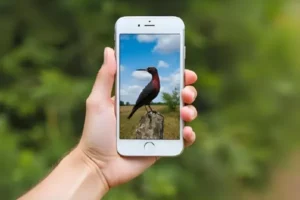
Merlin Bird ID provides Cornell Lab’s artificial intelligence for photo identification, song recognition, and personalized bird lists based on your location and date.
BirdNET excels at sound identification, using advanced algorithms to identify bird songs and calls from recordings. This proves invaluable for identifying secretive species that rarely show themselves.
Recording and Documentation Equipment
Documenting your birding experiences enhances both learning and long-term enjoyment while contributing to scientific understanding.
Notebook and Field Journal Essentials
Waterproof notebooks protect your observations from weather conditions. Rite in the Rain products withstand everything from morning dew to sudden downpours.
Effective field notes should include date, time, location, weather conditions, and habitat details alongside species observations. Recording behavior observations helps develop pattern recognition skills that improve future identifications.
Sketching supplies enhance field observations even for non-artists. Simple pencil sketches force careful observation of field marks and proportions that casual viewing might miss.
Camera Equipment for Bird Photography
Entry-level options like the Canon EOS R10 with 100-400mm lens provide excellent results for documenting birds without excessive investment.
Telephoto lens considerations: 400mm represents the minimum effective focal length for most bird photography. 600mm and longer lenses deliver frame-filling results but require sturdy tripods and careful technique.
Camera settings for birds: Shutter priority mode at 1/1000th second or faster freezes bird movement. Continuous autofocus tracking helps maintain sharp focus on moving subjects.
Audio Recording Devices for Birdsongs
Smartphone recordings often suffice for basic documentation, especially when using external microphones like the Rode VideoMic Me-L.
Dedicated recorders like the Zoom H1n Handy Recorder capture higher-quality audio that enables detailed analysis and species verification.
Parabolic microphones focus on distant sounds and reduce background noise, proving invaluable for recording secretive or distant species.
Clothing and Accessories for Birders
Proper clothing and accessories can determine whether a birding trip becomes memorable for the right or wrong reasons.
Weather-Appropriate Clothing
Layering systems adapt to changing conditions throughout long birding days. Start with moisture-wicking base layers, add insulating mid-layers, and finish with waterproof outer shells as conditions demand.
Earth-tone colors help birders blend into natural environments. Bright colors can spook wary species, while neutral browns, greens, and grays allow closer approaches.
Quiet fabrics prevent the rustling sounds that alert birds to your presence. Avoid nylon shells that crinkle with every movement.
Essential Accessories
Binocular straps distribute weight evenly and prevent accidental drops. Neoprene straps provide excellent comfort during extended use.
Lens caps with tethers prevent lost caps in field conditions. Many birders prefer flip-up caps that don’t require removal.
Multi-pocket vests organize field guides, notebooks, snacks, and spare equipment while keeping hands free for binoculars and note-taking.
Comfort and Safety Gear
Quality hiking boots with ankle support prevent injuries on uneven terrain common in prime birding habitats.
Insect repellent becomes essential during peak birding season when mosquitoes and ticks are most active. DEET-based repellents provide the most reliable protection.
Portable seats extend comfortable observation time, especially useful during extended hawk watches or owl surveys.
Budget Planning for Bird Watching Equipment
Building a complete birding kit requires strategic planning to maximize value while avoiding unnecessary expenses.
Beginner’s Equipment Bundle ($200-500)
Start with quality basics that will serve you well as skills develop:
- Binoculars: Celestron Nature DX 8×42 ($150)
- Field Guide: Regional Sibley Guide ($20)
- Notebook: Waterproof field notebook ($15)
- Basic accessories: Strap and lens caps ($25)
This foundation provides everything needed for productive birding while leaving room for specific upgrades as interests develop.
Intermediate Birder Upgrades ($500-1500)
As enthusiasm grows and specific interests emerge, strategic upgrades enhance the birding experience:
- Premium binoculars: Vortex Viper HD 8×42 ($500)
- Spotting scope: Entry-level Celestron 65mm ($400)
- Smartphone apps: eBird Pro subscription ($30/year)
- Photography equipment: Basic telephoto lens setup ($400)
Professional-Grade Equipment ($1500+)
Serious birders and those pursuing photography or research may invest in premium equipment:
- Elite binoculars: Swarovski SLC 8×42 ($1,400)
- High-end spotting scope: Swarovski ATX modular system ($2,500)
- Professional camera gear: Full-frame camera with 600mm lens ($4,000+)
Conclusion
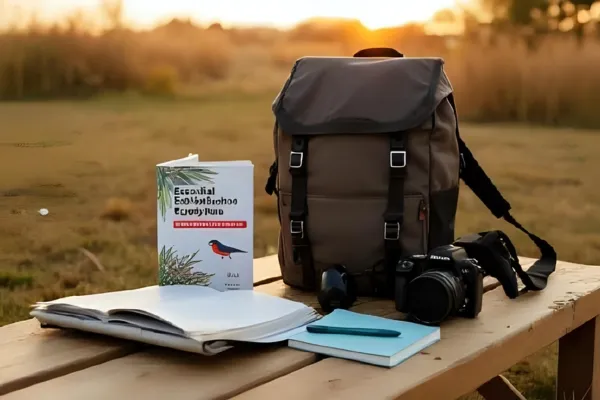
Building an effective bird watching equipment collection doesn’t happen overnight, but strategic investments in quality gear will enhance every moment spent in nature. Start with excellent binoculars—they form the foundation of every successful birding experience. Add regional field guides and basic accessories to create a complete beginner’s kit.
As your skills and interests develop, consider adding specialized equipment like spotting scopes for long-distance identification or camera gear for documentation. Remember that the best equipment is what you’ll actually use consistently and comfortably.
Most importantly, don’t let equipment concerns delay your entry into birding. Many memorable bird observations happen with basic equipment in the hands of an enthusiastic observer. Invest in quality when possible, but don’t let budget constraints prevent you from experiencing the joy of discovering the incredible diversity of bird life that surrounds us.
Your birding equipment should enhance your connection with nature, not become a barrier to it. Choose wisely, care for your gear properly, and let it serve as the bridge between your curiosity and the remarkable world of birds waiting to be discovered.
Frequently Asked Questions
What’s the minimum equipment needed to start birdwatching?
Quality binoculars (8×32 or 8×42) and a regional field guide provide everything necessary for productive birding. Many successful birders started with just these basics.
Should I buy expensive binoculars as a beginner?
Invest in the best binoculars your budget allows, but avoid overspending initially. Mid-range options like Vortex Diamondback HD provide excellent performance at reasonable prices.
Do I need a spotting scope for backyard birding?
Spotting scopes aren’t necessary for most backyard birding situations. Quality binoculars handle typical backyard distances effectively. Consider scopes for shorebird identification or hawk migration viewing.
What’s the difference between bird photography and general birding equipment?
Bird photography requires longer telephoto lenses (400mm+) and often heavier tripods, while general birding prioritizes lightweight, handheld equipment for mobility and comfort.
How do I maintain my birding equipment in field conditions?
Keep lens caps on when not actively observing, use protective covers in wet conditions, and clean optics with proper lens cloths. Store equipment in dry conditions and have gear serviced annually if used heavily.
Are smartphone apps reliable for bird identification?
Modern apps like Merlin Bird ID and BirdNET provide remarkably accurate identification assistance, especially when combined with traditional field guides. They’re excellent learning tools but shouldn’t replace developing personal identification skills.