Did you know that the average North American backyard hosts between 15-25 different bird species throughout the year? According to the Cornell Lab of Ornithology’s Project FeederWatch data, suburban environments have become crucial habitats supporting over 300 bird species across the continent. Yet most beginning birders can confidently identify fewer than five species visiting their own outdoor spaces.
The challenge isn’t lack of birds—it’s knowing what to look for. When faced with a small brown bird at the feeder or a medium-sized bird hopping across the lawn, new birdwatchers often feel overwhelmed by the subtle differences between species. Field guides can seem intimidating with their technical jargon, and many birders give up before developing the confidence to distinguish between similar-looking species like House Sparrows and Song Sparrows, or House Finches and Purple Finches.
This comprehensive guide will transform you from uncertain observer to confident identifier of the 15 most common backyard birds across North America. You’ll learn the essential field marks, behavioral cues, and identification shortcuts that experienced birders use to make quick, accurate identifications. By the end of this article, you’ll have the knowledge and confidence to identify the majority of birds visiting your backyard throughout the year, turning every glance out your window into an opportunity for successful birdwatching.
Essential Field Marks for Backyard Bird Identification
Size and Shape Fundamentals
Understanding bird proportions is your first step toward accurate identification. Ornithologists use a standard size comparison system that every backyard birder should master:
- Sparrow-sized: 4-6 inches (House Sparrow, Chickadee)
- Robin-sized: 8-10 inches (American Robin, Blue Jay)
- Crow-sized: 16-20 inches (American Crow, larger hawks)
Body shape reveals feeding habits and lifestyle. Seed-eating birds like finches display compact, rounded bodies with strong, conical bills. Insect-eaters such as wrens show slender builds with thin, pointed bills perfect for probing crevices.
Color Patterns and Seasonal Variations
Professional birders focus on pattern over individual colors, which can vary dramatically due to lighting conditions and seasonal molting. Key pattern elements include:
- Wing bars: Light stripes across dark wings
- Eye stripes: Lines above or through the eye
- Breast patterns: Spots, streaks, or solid colors
- Tail patterns: White outer feathers, colored tips, or distinctive shapes
Remember that many species exhibit dramatic seasonal plumage changes. American Goldfinches transform from bright yellow breeding males to olive-brown winter birds, while White-crowned Sparrows develop distinctive head stripes only in breeding season.
Bill Shapes and Feeding Adaptations
Bill morphology directly correlates with diet and provides reliable identification clues:
- Seed-crackers: Thick, conical bills (Cardinals, Grosbeaks)
- Insect-eaters: Thin, pointed bills (Wrens, Warblers)
- Nectar-feeders: Long, curved bills (Hummingbirds)
- Generalists: Medium, straight bills (Robins, Starlings)
Top 15 Backyard Birds: Complete Identification Guide
1. American Robin
Size: 10 inches | Common year-round
The quintessential lawn bird, American Robins display rusty-orange breasts, dark gray heads, and yellow bills. Males show deeper orange coloration than females. Listen for their liquid, flute-like song at dawn. Robins hop rather than walk, cocking their heads to listen for earthworms.
2. Northern Cardinal
Size: 8.5 inches | Common year-round
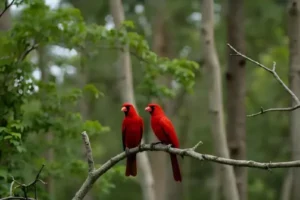
Males are unmistakable with brilliant red plumage and black face masks. Females show warm brown coloration with reddish tinges on wings, tail, and crest. Both sexes possess thick orange-red bills perfect for cracking seeds. Cardinals prefer dense shrubs and produce a distinctive “birdy-birdy-birdy” call.
3. Blue Jay
Size: 11 inches | Common year-round
Intelligent and vocal, Blue Jays display brilliant blue uppersides with white undersides and distinctive black necklaces. Their crested heads and long tails make them easily recognizable in flight. Blue Jays are excellent mimics, often imitating hawk calls to scatter other birds from feeders.
4. House Sparrow
Size: 6 inches | Common year-round
Males show chestnut nape patches, black bibs, and gray crown stripes during breeding season. Females appear streaky brown throughout. House Sparrows prefer urban environments and gather in noisy flocks around seed sources. They hop rather than walk and frequently dust-bathe.
5. American Goldfinch
Size: 5 inches | Common year-round
Breeding males transform into brilliant yellow birds with black wings and forehead patches. Winter birds appear olive-brown with subtle yellow highlights. Females maintain muted coloration year-round. Goldfinches display distinctive undulating flight patterns while calling “po-ta-to-chip.”
6. Black-capped Chickadee
Size: 5.25 inches | Common year-round
These acrobatic birds feature black caps and bibs contrasting with white cheeks and gray backs. Chickadees hang upside-down while feeding and cache thousands of seeds each fall. Their “chick-a-dee-dee” calls intensify when predators appear nearby.
7. Downy Woodpecker
Size: 6.75 inches | Common year-round
The smallest North American woodpecker, Downys show black-and-white striped backs with white undersides. Males display small red patches on their napes. They prefer suet feeders and dead tree branches, moving in jerky motions while searching for insects.
8. House Finch
Size: 6 inches | Common year-round
Males exhibit rosy-red coloration on heads, breasts, and rumps with brown-streaked backs. Females show overall brown streaking without red highlights. House Finches prefer platform feeders and produce warbling songs with harsh notes mixed throughout.
9. Mourning Dove
Size: 12 inches | Common year-round
These graceful birds display soft gray-brown plumage with dark spots on wings and distinctive pointed tails with white edges. Mourning Doves produce haunting “coo-OO-oo” calls and create whistling sounds with their wings during takeoff.
10. White-breasted Nuthatch
Size: 5.75 inches | Common year-round
Compact birds with blue-gray backs, white faces, and distinctive black caps that extend below the eyes. Nuthatches move headfirst down tree trunks, probing bark crevices for insects. They produce nasal “yank-yank” calls and frequently visit suet feeders.
11. Dark-eyed Junco
Size: 6.25 inches | Common in winter
Often called “snowbirds,” juncos display dark gray heads and backs with bright white bellies and distinctive white outer tail feathers visible in flight. They prefer ground feeding and scratch through leaf litter with both feet simultaneously.
12. Red-winged Blackbird
Size: 8.75 inches | Common spring-summer
Males show glossy black plumage with bright red shoulder patches bordered by yellow. Females appear heavily streaked brown and are often confused with large sparrows. Red-wings prefer marshy areas and display territorial behavior from prominent perches.
13. Song Sparrow
Size: 6.25 inches | Common year-round
Medium-sized sparrows with heavy brown streaking on white breasts, often forming a central breast spot. Song Sparrows pump their tails in flight and produce varied, musical songs beginning with clear notes followed by buzzes and trills.
14. European Starling
Size: 8.5 inches | Common year-round
Highly adaptable birds with iridescent black plumage showing purple and green highlights in good light. Winter birds display white spotting throughout. Starlings walk rather than hop and gather in massive flocks during fall and winter.
15. House Wren
Size: 4.75 inches | Common spring-summer
Small brown birds with slightly curved bills and upright tail postures. House Wrens lack distinctive markings but compensate with energetic behavior and bubbling, cascading songs. They prefer cavity nest sites and actively defend territory through singing.
Behavioral Clues That Make Identification Easier
Feeding Patterns and Preferences
Understanding feeding behaviors accelerates identification success:
Ground feeders: Juncos, sparrows, and towhees scratch through leaf litter with distinctive double-kick motions.
Aerial insectivores: Swallows and flycatchers catch insects in flight, often returning to the same perch repeatedly.
Bark gleaners: Nuthatches and woodpeckers probe tree bark, with nuthatches moving headfirst down trunks while woodpeckers typically move upward.
Flight Characteristics
Flight patterns provide reliable identification clues even at distance:
Undulating flight: Goldfinches and woodpeckers alternate flapping with closed-wing glides, creating roller-coaster patterns.
Direct flight: Starlings and blackbirds maintain steady wingbeats in straight lines.
Erratic flight: Chimney Swifts appear to flicker through the air with rapid, irregular wingbeats.
Social Behaviors and Flocking
Flock composition reveals species identity:
Mixed winter flocks: Chickadees, nuthatches, and small woodpeckers often forage together for protection and increased foraging efficiency.
Single-species flocks: European Starlings and Red-winged Blackbirds form massive flocks during migration and winter.
Solitary species: Many hawks and owls maintain individual territories except during breeding season.
Seasonal Identification Challenges and Solutions
Winter vs. Summer Plumage Changes
Many species undergo dramatic seasonal transformations that challenge identification:
American Goldfinches change from bright yellow (breeding males) to olive-brown (non-breeding), maintaining only subtle yellow highlights and distinctive wing bars.
Red-winged Blackbirds develop rusty feather edges during fall, creating mottled appearances that confuse beginning birders.
House Sparrows show reduced black bib coloration during winter as feather edges wear away gradually throughout the season.
Migration Patterns Affecting Backyard Visits
Understanding regional migration timing improves identification success:
Permanent residents: Cardinals, Blue Jays, and Chickadees remain in territories year-round, providing consistent identification opportunities.
Seasonal migrants: Dark-eyed Juncos arrive in northern regions during late fall, remaining through winter before departing for breeding grounds.
Irregular visitors: Pine Siskins and Evening Grosbeaks appear unpredictably during “irruption years” when northern food sources fail.
Essential Tools for Successful Backyard Bird Identification
Binocular Selection and Usage
Quality binoculars transform backyard birding experiences:
Magnification: 8×42 binoculars provide optimal balance between magnification and field of view for backyard distances.
Close focus: Choose binoculars focusing to 6 feet or less for feeders and nearby perches.
Weight consideration: Lightweight models reduce neck strain during extended observation sessions.
Field Guides vs. Mobile Apps
Modern identification tools offer distinct advantages:
Traditional field guides provide comprehensive information but require memorization of key field marks.
Mobile apps like Merlin Bird ID offer instant audio playback and photo comparison features, perfect for real-time identification.
Combination approach: Use apps for immediate identification and field guides for deeper species understanding.
Creating Observation Logs
Systematic record-keeping accelerates learning:
Document date, time, weather conditions, and specific behaviors observed. Note seasonal patterns and unusual sightings. Review logs regularly to identify knowledge gaps and track personal progress.
Conclusion
Mastering backyard bird identification opens doorways to deeper nature connections and lifelong learning opportunities. The 15 species covered in this guide represent the foundation of North American backyard birding, appearing consistently across diverse suburban environments throughout the continent.
Remember that identification skills develop gradually through consistent observation and practice. Focus on one or two species at a time, studying their unique field marks, behaviors, and vocalizations until recognition becomes instinctive. Each successful identification builds confidence and prepares you for more challenging species encounters.
As your skills progress, consider participating in citizen science projects like eBird or Project FeederWatch, contributing valuable data to ornithological research while expanding your identification abilities. The backyard birding community welcomes enthusiastic participants at every skill level.
Your journey toward expert bird identification starts with these common species, but the adventure extends far beyond backyard boundaries. Use this foundational knowledge as your springboard toward exploring diverse habitats and discovering the remarkable diversity of North American birdlife.
Frequently Asked Questions
What’s the best time of day for backyard bird identification?
Early morning (dawn to 10 AM) provides optimal birding opportunities when birds are most active feeding and singing. Late afternoon (3-5 PM) offers a secondary peak activity period.
How can I attract more bird species to my backyard?
Provide diverse food sources (seeds, suet, nectar), fresh water sources, and varied habitat structure including trees, shrubs, and open areas. Native plants attract insects, providing natural food sources.
What’s the difference between House Sparrows and Song Sparrows?
House Sparrows show cleaner facial patterns with distinct gray crowns and chestnut napes. Song Sparrows display heavy breast streaking and prefer brushy edges over urban environments.
Why do bird colors appear different in various lighting conditions?
Feather structure creates iridescence and color variations depending on light angles. Focus on patterns and proportions rather than exact colors for reliable identification.
How long does it take to become proficient at bird identification?
Most birders achieve confidence with common species within 6-12 months of regular observation. Advanced identification skills develop over years of continuous learning and field experience.
Should I rely on mobile apps or traditional field guides?
Combine both tools for optimal results. Mobile apps provide immediate assistance and audio features, while field guides offer comprehensive information for deeper understanding.
What should I do if I see an unusual bird I can’t identify?
Take detailed notes about size, colors, patterns, and behavior. Photograph if possible. Consult multiple field guides or post to birding forums like eBird for community assistance.