Did you know that birds construct over 180 different types of nests, from the tiny hummingbird’s cup the size of a golf ball to the massive stick platforms of eagles that can weigh over a ton? For many birdwatchers, identifying species through song or plumage comes naturally, but recognizing birds by their nesting habits remains an underutilized skill that can dramatically enhance your field observations.
The challenge lies in understanding the intricate relationship between nest architecture, materials, location, and timing—each offering crucial clues about the species that built them. Whether you’re observing a perfectly woven hanging basket or a simple scrape in the ground, these structures tell fascinating stories about avian behavior, evolution, and adaptation.
By mastering the art of reading nesting habits, you’ll unlock a new dimension of birdwatching that extends your identification abilities beyond fleeting glimpses of flying birds. This comprehensive guide will transform you into a nest detective, capable of identifying species even when the builders are nowhere to be seen.
Understanding Bird Nesting Fundamentals
The Science Behind Nest Building
Bird nesting behavior represents millions of years of evolutionary refinement. According to research from Cornell University’s Laboratory of Ornithology, nesting strategies directly correlate with species survival rates, predator pressure, and environmental conditions.
Most temperate zone birds nest during spring and early summer when food abundance peaks and weather conditions stabilize. However, timing varies dramatically by species:
- Early nesters (February-April): Raptors, owls, and corvids
- Peak nesters (April-June): Majority of songbirds
- Late nesters (June-August): Goldfinches, cedar waxwings
- Multiple brooders: Robins, house wrens, mourning doves
Nest Site Selection Criteria
Birds evaluate potential nesting sites using sophisticated criteria that birdwatchers can learn to recognize:
Safety factors:
- Protection from prevailing winds
- Concealment from predators
- Structural stability of support
Resource accessibility:
- Proximity to food sources
- Availability of nesting materials
- Access to water
Microclimate considerations:
- Appropriate sun exposure
- Protection from extreme temperatures
- Drainage and moisture control
Types of Bird Nests and Construction Methods
Cup Nests: Nature’s Perfect Bowls
Cup nests represent the most recognizable nest type, accounting for approximately 60% of North American bird species. These bowl-shaped structures showcase remarkable engineering principles.
Characteristics:
- Circular or oval opening
- Deep interior for egg protection
- Reinforced rim for structural integrity
- Soft lining materials
Notable cup nest builders:
- American Robin: Mud-reinforced foundation with grass lining
- House Finch: Loose construction with various materials
- Northern Cardinal: Loosely woven twigs with fine grass interior
Platform Nests: Minimalist Approach
Platform nests appear deceptively simple but serve specific ecological functions, particularly for larger birds and species that need quick escape routes.
Design features:
- Flat or slightly concave surface
- Minimal depth
- Strong foundation materials
- Strategic placement for visibility
Platform nest specialists:
- Mourning Dove: Flimsy stick platforms, often reused by other species
- Great Blue Heron: Massive stick constructions in colony settings
- Osprey: Enormous platforms topped with softer materials
Cavity Nests: Underground and Tree Dwellings
Cavity nesters divide into two categories: primary excavators that create their own cavities, and secondary cavity nesters that use existing holes.
Primary excavators:
- Woodpeckers: Excavate fresh cavities annually
- Chickadees: Excavate soft, rotting wood
- Nuthatches: Modify existing cavities
Secondary cavity users:
- Bluebirds: Use woodpecker holes and nest boxes
- Tree Swallows: Compete intensely for available cavities
- House Wrens: Fill cavities completely with twigs
Nest Materials: Nature’s Construction Clues
Traditional Building Materials
Understanding material preferences provides powerful identification clues. Birds select materials based on availability, structural requirements, and inherited behavioral patterns.
Structural materials:
- Twigs and sticks: Size correlates with bird size
- Grass and plant fibers: Woven or layered construction
- Mud: Mixed with organic matter for adhesion
- Spider silk: Provides stretch and binding properties
Lining materials:
- Soft grasses: Temperature regulation
- Animal hair and fur: Insulation properties
- Feathers: Down feathers for warmth
- Moss: Moisture control and softness
Modern Material Adaptations
Contemporary birds increasingly incorporate human-made materials, creating identification opportunities and conservation concerns.
Common urban materials:
- Plastic strips and packaging
- String and yarn
- Paper and tissue
- Metal wire and twist ties
Species-specific preferences:
- House Sparrows: Paper scraps and synthetic fibers
- Northern Mockingbirds: Plastic bags and artificial flowers
- American Crows: Wire and metal objects
Nesting Locations and Habitat Preferences
Vertical Nesting Zones
Different species specialize in specific height zones, creating predictable patterns that aid identification.
Canopy nesters (50+ feet):
- Red-eyed Vireo: Suspended cup in deciduous canopy
- Scarlet Tanager: Horizontal branch placement
- Baltimore Oriole: Hanging pouch nest
Mid-story nesters (10-50 feet):
- Wood Thrush: Understory cup with mud foundation
- Gray Catbird: Dense shrub construction
- Northern Cardinal: Thick vegetation concealment
Low shrub nesters (3-10 feet):
- Song Sparrow: Ground to low bush variable placement
- Yellow Warbler: Forked branch construction
- Indigo Bunting: Dense herbaceous cover
Ground nesters:
- Dark-eyed Junco: Concealed under vegetation
- Ovenbird: Domed ground nest with side entrance
- Killdeer: Simple scrape in open areas
Habitat-Specific Adaptations
Forest specialists:
- Complex, multi-layer construction
- Earth-tone materials for camouflage
- Integration with natural surroundings
Grassland adapters:
- Ground-level or low placement
- Grass-dominated construction
- Wind-resistant design
Wetland builders:
- Elevated platforms above water level
- Water-resistant materials
- Anchoring to vegetation
Identifying Species Through Nesting Behavior
Architectural Signatures
Each species leaves distinctive architectural signatures that experienced birdwatchers can recognize.
Weaving patterns:
- Baltimore Oriole: Intricate hanging basket with entrance at top
- Red-winged Blackbird: Woven grass cup attached to vertical stems
- Bushtit: Hanging sock-like structure with side entrance
Construction techniques:
- House Wren: Cavity completely filled with twigs
- Eastern Bluebird: Neat cup with fine grass construction
- Brown Thrasher: Loose, bulky stick foundation
Timing and Behavioral Clues
Early season indicators:
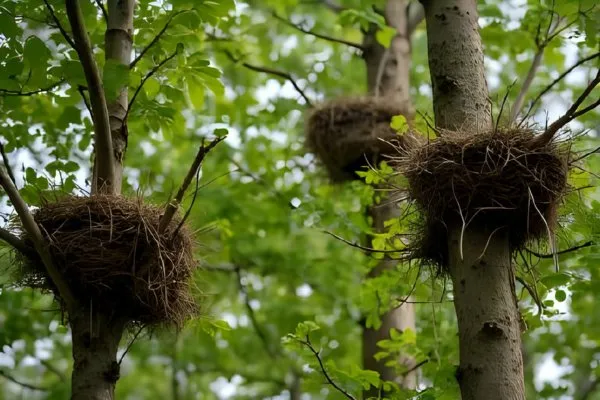
- Large stick nests visible before leaf-out: Hawks, eagles, herons
- Cavity preparation activity: Woodpecker drumming and excavation
- Territory establishment: Males singing from potential nest sites
Construction phase observations:
- Material gathering behavior
- Building duration (varies from days to weeks)
- Cooperative vs. single-sex construction
Occupancy signs:
- Regular adult activity patterns
- Feeding flight paths
- Defensive behavior around nest site
Ethical Birdwatching During Nesting Season
Safe Observation Practices
Responsible nest observation requires understanding bird stress indicators and maintaining appropriate distances.
Minimum observation distances:
- Small songbirds: 15-25 feet
- Medium birds (crows, jays): 50+ feet
- Large raptors: 100+ yards
- Colonial nesters: Follow posted guidelines
Stress indicators to watch for:
- Alarm calls or distress vocalizations
- Aggressive defensive behavior
- Adult reluctance to return to nest
- Rapid breathing or panting
Legal Protections and Regulations
The Migratory Bird Treaty Act provides federal protection for most bird nests, with severe penalties for disturbance.
Protected activities:
- Nest removal or destruction
- Egg collection or handling
- Deliberate disturbance during nesting
- Photography requiring close approach
Exceptions and considerations:
- House Sparrows, European Starlings, and Rock Pigeons lack protection
- Some species have specific management protocols
- State regulations may provide additional protections
Conservation Impact of Observation
Best practices for conservation:
- Observe from distance using binoculars or spotting scopes
- Limit visit frequency and duration
- Avoid sharing specific location information publicly
- Support habitat conservation organizations
Citizen science contributions:
- eBird nest data submissions
- NestWatch program participation
- Local breeding bird surveys
- Nest monitoring volunteer programs
Advanced Identification Techniques
Seasonal Timing Patterns
Species-specific breeding schedules:
- Great Horned Owls: January-February in most regions
- American Goldfinches: July-August, coinciding with thistle seed production
- Ruby-throated Hummingbirds: May-June, following flower blooms
Regional Variations
Nesting habits adapt to local conditions, creating regional identification variations that experienced birdwatchers learn to recognize.
Climate adaptations:
- Northern populations: Later nesting, more insulated construction
- Southern populations: Earlier breeding, heat protection emphasis
- Mountain populations: Elevation-specific timing adjustments
Material availability:
- Desert regions: Increased use of thorny protective materials
- Coastal areas: Incorporation of seaweed and marine debris
- Urban environments: Synthetic material integration
Conclusion
Mastering bird nesting habits opens an entirely new dimension of birdwatching that extends your identification abilities far beyond traditional sight and sound recognition. By understanding the intricate relationships between nest architecture, materials, location, and timing, you develop the skills to identify species even when the builders are absent.
The key principles to remember include recognizing that nest construction reflects millions of years of evolutionary adaptation, with each species developing specialized techniques for survival in their specific environments. Material selection, architectural design, and site placement all provide crucial identification clues that complement traditional field marks.
As you develop these skills, always prioritize ethical observation practices that protect nesting birds and their young. The breeding season represents the most critical period in a bird’s annual cycle, and responsible birdwatching ensures these magnificent creatures can successfully reproduce and maintain healthy populations.
Your journey into nest identification will deepen your appreciation for avian intelligence, adaptability, and the complex ecological relationships that sustain bird communities. With practice and patience, you’ll discover that every nest tells a story—not just of individual birds, but of the broader natural world they inhabit.
FAQ
When is the best time to observe bird nests?
The optimal time for nest observation is during the construction phase, typically 2-4 weeks before eggs are laid. This allows you to watch building behavior without disturbing incubating adults or vulnerable young. Early morning hours (6-10 AM) provide the most building activity.
How can I tell if a nest is currently active?
Active nests show regular adult activity, including frequent visits with food or nesting materials, defensive behavior when you approach, and fresh-looking construction materials. Abandoned nests appear weathered, may contain debris, and show no adult activity over several days of observation.
Is it legal to collect or move bird nests?
Federal law protects most bird nests under the Migratory Bird Treaty Act. Collecting, moving, or disturbing active nests is illegal and can result in significant fines. Only nests of non-native species (House Sparrow, European Starling, Rock Pigeon) lack protection. Always check local regulations before any nest-related activity.
How close can I get to a bird nest for observation?
Safe observation distances vary by species size and temperament. Small songbirds require 15-25 feet minimum, while large raptors need 100+ yards. Use binoculars or spotting scopes to maintain appropriate distances while getting detailed views of nest construction and activity.
What should I do if I accidentally disturb a nesting bird?
If you accidentally flush an adult from its nest, immediately retreat to a safe distance and wait quietly. Most birds will return within 15-30 minutes if you remain still and quiet. If the bird doesn’t return within an hour, you may have caused significant disturbance and should avoid the area for several days.
Can birds reuse their nests from previous years?
Nest reuse varies dramatically by species. Large birds like eagles and herons often reuse and expand the same nest for multiple years. Most small songbirds build new nests each breeding attempt, though some species may reuse cup nests within the same season. Platform nesters like mourning doves often have their old nests taken over by other species.
How do I report interesting nesting observations to scientists?
Several citizen science programs welcome nest observations, including eBird (Cornell Lab of Ornithology), NestWatch, and local breeding bird surveys. When reporting, include detailed location information, species identification, nest description, and behavioral observations. Photos can be valuable if taken from appropriate distances without disturbing the birds.