Did you know that the average backyard in North America hosts between 15-25 different bird species throughout the year? Yet most homeowners can identify fewer than five of these feathered visitors. This disconnect represents one of the greatest missed opportunities in modern nature appreciation.
The Challenge Every Backyard Observer Faces
Walking outside and seeing “just another small brown bird” at your feeder is frustrating. Without proper field marks knowledge, even the most common species become anonymous visitors. You’re missing the intricate behaviors, seasonal patterns, and unique characteristics that make each species fascinating. This uncertainty prevents you from fully appreciating the remarkable diversity right outside your window.
Transform Your Backyard Into a Living Field Guide
This comprehensive guide will equip you with expert identification techniques used by professional ornithologists, adapted specifically for backyard observation. You’ll learn to distinguish between similar species using size, behavior, and field marks. By the end, you’ll confidently identify 15+ common backyard birds, understand their feeding preferences, and create an environment that attracts even more species to observe.
Understanding Backyard Bird Basics
Successful backyard birdwatching starts with understanding why certain species choose urban and suburban environments. Unlike their forest-dwelling relatives, backyard birds have adapted to human presence and often thrive in modified landscapes that provide consistent food sources, water, and nesting opportunities.
Peak Activity Windows
The golden hours for backyard observation occur during early morning (30 minutes after sunrise) and late afternoon (2 hours before sunset). During these periods, birds are most active in feeding and territorial behaviors. Research from the Cornell Lab of Ornithology shows that 75% of backyard bird activity occurs during these windows, making timing crucial for successful observation.
Environmental Factors
Weather significantly influences bird behavior and visibility. Calm, overcast mornings often produce the best viewing conditions, as birds remain active longer without harsh sunlight creating difficult lighting conditions. Post-storm periods frequently bring increased activity as birds resume interrupted feeding patterns.
Creating Observation Opportunities
Position yourself near natural gathering points like bird baths, feeders, or fruiting trees. Maintain a 15-20 foot distance to observe natural behaviors without causing stress. Sudden movements trigger flight responses, so slow, deliberate motions ensure longer observation periods.
Most Common Backyard Birds by Region
North American Favorites
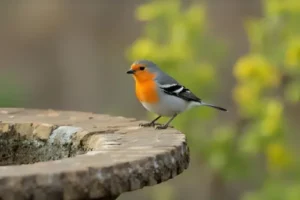
American Robin (Turdus migratorius) The quintessential suburban bird, American Robins display distinctive orange-red breasts with gray-brown backs. Males show deeper orange coloration and darker heads compared to females. Their ground-foraging behavior involves characteristic “stop-and-go” hunting, where they pause, cock their heads to listen for earthworms, then pounce.
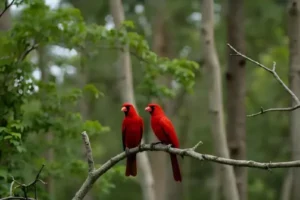
Northern Cardinal (Cardinalis cardinalis) Male Cardinals present unmistakable bright red plumage with black face masks, while females show warm brown tones with reddish tinges on wings, tail, and crest. Both sexes possess the characteristic thick, orange-red bill designed for cracking seeds. Their “birdy-birdy-birdy” call is among the most recognizable backyard sounds.
Blue Jay (Cyanocitta cristata) These intelligent corvids display brilliant blue upperparts with white underparts and distinctive black markings around the head and throat. Their pointed crest moves expressively, indicating mood and alertness levels. Blue Jays frequently mob potential threats and serve as natural alarm systems for other backyard species.
Year-Round Residents
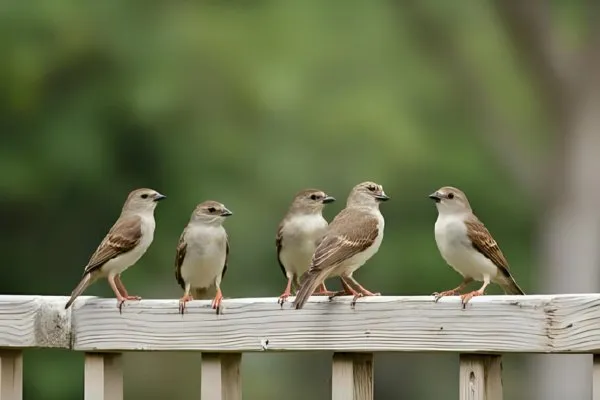
House Sparrow (Passer domesticus) Despite their “common” reputation, House Sparrows show remarkable sexual dimorphism. Males feature gray crowns, white cheeks, and black bibs, while females display subtle brown and gray streaking. Their social nature creates active feeding flocks that can include 20+ individuals during peak seasons.
Mourning Dove (Zenaida macroura) These gentle birds show soft gray-brown plumage with darker spots on wings and distinctive long, pointed tails with white outer edges visible in flight. Their mournful “coo-OO-oo-oo” call gives them their common name. Mourning Doves prefer feeding on open ground and demonstrate remarkable faithfulness to feeding sites.
Downy Woodpecker (Picoides pubescens) North America’s smallest woodpecker species, Downys measure only 6-7 inches. Males display small red patches on the back of their heads, while females lack red markings. Their white backs with black wings create striking contrast patterns. Unlike larger woodpeckers, they frequently visit suet feeders and can hang upside down while feeding.
Seasonal Visitors
Dark-eyed Junco (Junco hyemalis) These “snowbirds” arrive in northern regions during late fall and winter. Their slate-gray upperparts contrast sharply with white bellies and distinctive white outer tail feathers that flash conspicuously during flight. Regional variations exist, with Oregon Juncos showing rusty brown sides and Pink-sided Juncos displaying subtle pink flanks.
White-throated Sparrow (Zonotrichia albicollis) Winter visitors throughout much of North America, these sparrows show distinctive white throat patches bordered by gray, plus yellow spots between the bill and eye (lores). Their clear, whistled song sounds like “Old Sam Peabody-Peabody-Peabody.” Two color morphs exist: white-striped and tan-striped crown patterns.
Field Identification Techniques
Size and Shape Assessment
Developing accurate size estimation skills transforms identification success. Use familiar reference points: House Sparrows (6 inches) serve as excellent “rulers” for comparison. American Robins (10 inches) represent medium-sized songbirds, while Blue Jays (11 inches) indicate larger species.
Body Proportions Matter
Bill shape indicates feeding strategy: thick, seed-cracking bills (Cardinals, Grosbeaks) versus thin, insect-catching bills (warblers, flycatchers). Leg length suggests habitat preference: long legs indicate ground-foraging species, while short legs suggest arboreal habits.
Color Pattern Recognition
Primary Field Marks
Focus on high-contrast areas: wing bars, eye rings, tail patterns, and breast markings. These features remain consistent across age and sex variations. White outer tail feathers (Dark-eyed Juncos), wing bars (White-breasted Nuthatches), and eye rings (Ruby-crowned Kinglets) provide instant identification clues.
Seasonal Variations
Many species show seasonal plumage changes. American Goldfinches transform from bright yellow breeding plumage to subdued olive-brown winter colors. Understanding molt patterns prevents misidentification during transition periods.
Behavioral Characteristics
Feeding Behaviors
Different species employ distinct foraging strategies that aid identification. Nuthatches characteristically move head-first down tree trunks, while Brown Creepers spiral upward around bark. Chickadees hang acrobatically from branch tips, and woodpeckers maintain vertical positions while excavating.
Flight Patterns
Flight characteristics provide identification clues even at distance. Woodpeckers show distinctive undulating flight patterns, goldfinches display bouncy, roller-coaster flights, and flycatchers make quick sallying flights from perches to catch insects.
Creating the Perfect Backyard Bird Habitat
Strategic Feeder Placement
Multiple Feeding Stations
Establish feeding zones at varying heights to accommodate different species’ preferences. Ground-level areas attract sparrows, towhees, and juncos. Platform feeders 3-5 feet high serve cardinals, chickadees, and nuthatches. Tube feeders at 5-8 feet primarily attract finches and smaller songbirds.
Feeder Types and Seeds
Nyjer (thistle) seed specifically targets goldfinches, siskins, and redpolls. Black oil sunflower seeds provide high-fat content preferred by Cardinals, Chickadees, and Nuthatches. White proso millet attracts ground-feeding species like sparrows and doves. Avoid mixed seed blends, as birds typically scatter unwanted seeds, creating waste.
Water Features
Year-Round Water Sources
Moving water attracts more species than static bowls. Simple dripping systems created with punctured milk jugs provide auditory attractants audible to birds from significant distances. Shallow basins (1-2 inches deep) accommodate most songbird species, while deeper areas (3-4 inches) serve larger birds like robins and jays.
Winter Water Management
Heated bird baths prevent freezing and provide critical water sources during cold periods when natural sources become unavailable. Research indicates that water availability often attracts more species than food sources alone.
Native Plant Landscaping
Seed-Producing Plants
Native grasses like little bluestem and switchgrass provide natural seed sources that remain available throughout winter months. Sunflowers (Helianthus species) attract goldfinches, chickadees, and nuthatches. Coneflowers (Echinacea) and black-eyed Susans provide both seeds and insect habitat.
Berry-Producing Species
Elderberries, serviceberries, and native cherry species attract fruit-eating birds including robins, waxwings, and thrushes. These plants provide sequential fruiting throughout growing seasons, ensuring consistent food availability.
Advanced Tips for Better Observation
Basic Equipment Recommendations
Binocular Selection
For backyard observation, 7×35 or 8×42 binoculars provide optimal magnification without excessive weight or hand shake issues. Higher magnifications (10x and above) require tripod support for steady viewing. Look for models with close focus capabilities (under 8 feet) for near-distance observations.
Field Notebooks
Systematic recording enhances learning and creates valuable personal databases. Note date, time, weather conditions, species observed, behaviors witnessed, and any unusual characteristics. These records reveal seasonal patterns and help track returning migrants.
Photography Considerations
Ethical Distance Maintenance
Maintain minimum 15-foot distances from active nests and feeding areas. Use longer focal length lenses (300mm+) rather than approaching closer for better shots. Flash photography can startle birds and should be avoided, especially during breeding seasons.
Documentation Value
Photograph unusual visitors or behaviors for later identification confirmation. Multiple angles help capture important field marks that might not be visible in single images. Include habitat context to assist with species verification.
Technology Integration
Mobile Applications
eBird by Cornell Lab allows real-time reporting and access to recent sighting data for local areas. Merlin Bird ID provides photo, sound, and characteristic-based identification tools. These apps enhance field experience and contribute to citizen science databases.
Sound Recording
Many species have distinctive vocalizations that aid identification when visual observation proves difficult. Simple smartphone apps can record bird songs for later comparison with reference materials.
Seasonal Observation Strategies
Spring Migration Patterns
Early Arrivals (March-April)
Red-winged Blackbirds and Common Grackles typically arrive first, followed by American Robins and Song Sparrows. These hardy species can tolerate variable spring weather conditions and often arrive before insect populations peak.
Peak Activity (April-May)
Warbler species pass through during peak spring migration, offering opportunities to observe species that rarely visit during other seasons. Yellow Warblers, American Redstarts, and Yellow-rumped Warblers frequently visit backyard areas during migration stops.
Summer Breeding Behaviors
Territorial Displays
Breeding males exhibit heightened activity levels and increased vocalization. Cardinals, robins, and wrens defend territories aggressively, providing excellent observation opportunities for natural behaviors rarely seen during other seasons.
Fledgling Activity
Late spring and early summer produce fledgling birds learning to forage independently. These young birds often appear disheveled and may be mistaken for injured birds. Observe from distance to avoid interfering with natural learning processes.
Fall and Winter Adaptations
Flocking Behaviors
Many species form mixed foraging flocks during winter months. Chickadees often lead these groups, joined by nuthatches, woodpeckers, and kinglets. These associations provide increased foraging efficiency and predator detection capabilities.
Food Caching
Observe woodpeckers and nuthatches storing seeds and nuts for winter survival. These behaviors demonstrate remarkable spatial memory capabilities and provide fascinating behavioral observation opportunities.
Conservation Connections
Citizen Science Participation
Christmas Bird Count
The National Audubon Society’s Christmas Bird Count represents the longest-running citizen science project in the world. Participating in local counts contributes valuable data while improving identification skills through expert guidance.
eBird Submissions
Regular eBird submissions create valuable databases that inform conservation decisions and track population trends. Even common backyard observations contribute to broader understanding of species distributions and abundance patterns.
Backyard Conservation Practices
Pesticide-Free Environments
Eliminating pesticide use creates healthier insect populations that support insectivorous bird species. Natural pest control through bird predation often proves more effective than chemical treatments while maintaining ecological balance.
Cat Management
Free-ranging cats kill billions of birds annually in North America. Keeping domestic cats indoors or creating enclosed outdoor spaces protects bird populations while ensuring cat safety from vehicles, predators, and disease.
Conclusion
Mastering backyard bird identification transforms ordinary outdoor moments into extraordinary wildlife encounters. The 15+ species covered in this guide represent just the beginning of your birding journey. Each observation builds upon previous experience, creating deeper appreciation for the remarkable adaptability and diversity of backyard birds.
Remember that consistent observation yields the greatest rewards. Daily five-minute sessions often prove more valuable than occasional extended periods, as regular monitoring reveals behavioral patterns and seasonal changes that enhance identification confidence.
Your Next Steps Forward
Begin implementing strategic habitat improvements while practicing identification techniques covered in this guide. Start a backyard bird journal, noting species, behaviors, and seasonal patterns. Join local birding groups or online communities to share observations and learn from experienced birders.
The birds are already there, waiting for you to notice their individual characteristics and behaviors. With these expert techniques, you’re equipped to transform your backyard into a living classroom that provides endless learning opportunities and natural inspiration.
Future Exploration Opportunities
Consider expanding your observations beyond backyard boundaries. Local parks, nature centers, and wildlife refuges offer opportunities to observe additional species while applying identification skills developed in your backyard. Many communities offer guided bird walks led by experienced naturalists who can accelerate your learning process.
The journey from casual observer to confident birder begins with that first correctly identified species. Every expert birder started exactly where you are now, looking at birds with curiosity and determination to learn their identities and secrets.
Frequently Asked Questions
How long does it take to become proficient at identifying common backyard birds?
Most dedicated beginners can confidently identify 10-15 common species within 2-3 months of regular observation. Consistent daily practice, even for just 10-15 minutes, accelerates learning more effectively than occasional extended sessions. Using field guides and apps for immediate confirmation helps cement identification features in memory.
What’s the most important equipment for starting backyard birdwatching?
Quality binoculars (7×35 or 8×42) represent the single most important investment. A basic field guide for your region and a simple notebook for recording observations complete the essential toolkit. Avoid expensive equipment initially; developing observation skills matters more than having premium gear.
How can I attract more bird species to my backyard?
Provide diverse food sources (seeds, suet, nectar), clean water sources, and varied habitat levels (ground, shrub, canopy). Native plants typically attract more species than exotic ornamentals. Patience proves crucial—new species may take several weeks to discover and regularly visit new feeding stations.
Should I stop feeding birds during summer months?
Continue feeding year-round if you maintain clean feeders and fresh food. Summer feeding supports breeding birds and provides opportunities to observe family groups and fledgling behaviors. Clean feeders weekly during warm weather to prevent bacterial growth and disease transmission.
How do I distinguish between similar-looking species like different sparrows?
Focus on specific field marks: bill shape and color, head patterns (stripes, caps, eye rings), breast markings, and overall size. Behavior also helps—Song Sparrows often pump their tails while feeding, while House Sparrows move in quick hops. Take time to study one common species thoroughly before attempting similar species.
What should I do if I find an injured bird in my backyard?
Contact local wildlife rehabilitators or veterinarians immediately. Avoid direct contact—use gloves or towels if handling becomes necessary. Place injured birds in dark, quiet boxes with ventilation holes and keep in warm, calm locations until professional help arrives. Never attempt to provide food or water to injured birds.
How do weather conditions affect bird activity and observation opportunities?
Light rain often increases activity as birds resume feeding after being sheltered. Strong winds decrease visibility and bird activity. Immediately after storms, increased activity occurs as birds restore interrupted feeding patterns. Cold, clear mornings typically provide the best observation conditions with highest activity levels.
Can I use smartphone apps for bird identification, and how accurate are they?
Modern apps like Merlin Bird ID show remarkable accuracy for common species when provided with clear photos or recordings. However, use apps as learning tools rather than definitive identifiers. Confirm identifications using multiple sources and develop personal observation skills rather than relying solely on technology.