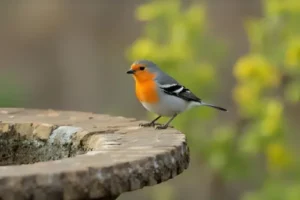

Forest environments harbor nearly 40% of all bird species worldwide, yet identifying these elusive creatures remains one of birdwatching’s greatest challenges. Dense canopies, limited visibility, and overlapping songs create a complex puzzle that frustrates even experienced birders.
The primary obstacle facing woodland observers is the three-dimensional nature of forest ecosystems. Unlike open habitats where birds are easily visible, forest species occupy distinct vertical layers, move rapidly through dense vegetation, and often remain hidden in shadows. Many beginners abandon forest birding after unsuccessful attempts to spot and identify these secretive species.
This comprehensive guide will transform you into a confident forest bird identifier. You’ll master proven techniques used by professional ornithologists, learn to recognize key species by sight and sound, and develop the patience and skills needed to unlock the hidden world of woodland birds. Whether you’re tracking a distant woodpecker drumming or identifying a fleeting warbler, these methods will elevate your forest birding success dramatically.
Understanding Forest Bird Habitats and Behaviors
Canopy Layers and Bird Distribution
Forest ecosystems operate as vertical communities, with distinct bird species occupying specific layers from ground to treetops. Understanding this stratification is crucial for successful identification and observation.
The emergent layer hosts large raptors like Red-shouldered Hawks and Cooper’s Hawks, which use towering trees as hunting perches and nesting sites. These apex predators are often visible soaring above the canopy or perched on exposed branches.
The canopy layer supports the greatest diversity of forest birds. Species like American Redstarts, Black-throated Blue Warblers, and various vireos spend most of their time foraging among leaves and branches 50-100 feet above ground. Their constant movement and dappled lighting make visual identification challenging.
The understory layer attracts ground-foraging specialists and shrub-nesting species. Hermit Thrushes, American Robins, and Wood Thrushes frequently work through leaf litter, while species like Northern Cardinals prefer dense shrub cover for protection and nesting.
Understanding these preferences allows you to position yourself strategically. Rather than scanning randomly, focus your observations on the appropriate layer for your target species.
Feeding Patterns in Forest Ecosystems
Forest birds exhibit specialized feeding behaviors that provide reliable identification clues. Recognizing these patterns dramatically improves your success rate.
Bark foragers like woodpeckers, nuthatches, and creepers display distinctive movement patterns. Downy and Hairy Woodpeckers spiral up tree trunks, while nuthatches move headfirst down bark surfaces. Brown Creepers always work upward in spiral patterns, starting at the base of trees.
Foliage gleaners including most warblers and vireos pick insects from leaves and twigs. Their feeding behavior creates characteristic movement patterns—quick, precise movements punctuated by brief pauses. Yellow Warblers typically feed in outer canopy areas, while Ovenbirds prefer ground-level foraging.
Aerial insectivores like Eastern Wood-Pewees and Least Flycatchers use prominent perches for sally-hunting. They dart out to catch flying insects before returning to the same or nearby perch. This predictable behavior makes them easier to observe and photograph.
Seasonal Migration Through Woodlands
Forest bird populations fluctuate dramatically with seasons, creating distinct identification opportunities throughout the year. Spring and fall migrations bring the greatest species diversity, while winter populations consist mainly of resident species and northern visitors.
Spring migration (April-May) offers peak warbler diversity. Species like Magnolia Warblers, Bay-breasted Warblers, and Blackburnian Warblers pass through deciduous forests in waves. Early morning hours provide optimal observation conditions as birds actively feed after overnight flights.
Fall migration presents identification challenges as many species appear in duller plumage. However, this season offers extended observation periods as birds spend more time feeding to build fat reserves for long flights.
Winter populations focus on seed-eating specialists and insects-eating residents. Species like White-breasted Nuthatches, Downy Woodpeckers, and Dark-eyed Juncos become more conspicuous as leaf cover disappears and competition for resources intensifies.
Essential Visual Identification Techniques for Forest Birds
Size and Silhouette Recognition
Accurate size estimation forms the foundation of forest bird identification. In dense woodland environments where details remain obscured, overall proportions often provide the first reliable identification clue.
Develop size references using common species. A American Robin measures approximately 10 inches, providing an excellent medium-sized standard. House Sparrows (6 inches) represent small bird size, while American Crows (17 inches) exemplify large forest species.
Bill proportions reveal feeding specializations and narrow identification possibilities. Seed-eating species like Northern Cardinals display thick, powerful bills perfect for cracking hard shells. Insect-eating warblers possess thin, pointed bills designed for precise prey capture. Woodpeckers show chisel-shaped bills adapted for bark excavation.
Tail length and shape provide additional identification clues. Long-tailed species like Brown Thrashers and Gray Catbirds use extended tails for balance while foraging in dense vegetation. Short-tailed species like kinglets and nuthatches prioritize maneuverability over balance.
Wing shape indicates flight behavior and habitat preferences. Species with pointed wings like swallows excel at aerial pursuit of insects. Rounded wings characterize species that navigate dense forest vegetation, prioritizing maneuverability over speed.
Color Patterns and Field Marks
Forest lighting creates challenging observation conditions that can dramatically alter color perception. Successful forest birders learn to focus on high-contrast field marks that remain visible in dappled light.
Wing bars provide reliable identification features for many species. White wing bars on Blue Jays remain visible even in deep shade, while the subtle wing markings on Ruby-crowned Kinglets help distinguish them from similar species.
Eye rings and supercilium stripes create distinctive facial patterns that persist in various lighting conditions. The prominent white eye ring of Blue-headed Vireos stands out clearly, while the yellow supercilium of Nashville Warblers helps separate them from other small songbirds.
Rump patches often provide the only visible field mark as birds fly away through forest vegetation. The white rump patch of Yellow-rumped Warblers serves as their most reliable identification feature, visible even in quick glimpses.
Undertail coverts frequently show contrasting colors that aid identification. The rufous undertail coverts of Eastern Towhees remain visible as birds scratch through leaf litter, while the white undertail coverts of Dark-eyed Juncos flash conspicuously during flight.
Flight Patterns in Dense Vegetation
Forest birds have evolved distinct flight patterns adapted to navigate dense vegetation. Recognizing these patterns enables identification even when birds remain partially obscured.
Undulating flight characterizes woodpeckers and finches. Downy Woodpeckers display pronounced up-and-down flight patterns created by alternating wing beats and wing closure. This energy-efficient technique helps them navigate between trees while conserving energy.
Direct flight typifies larger forest species like crows and hawks. These birds maintain steady wing beats and straight flight paths, using their size and power to push through vegetation barriers.
Erratic flight patterns help small songbirds evade predators in dense cover. Species like wrens and kinglets employ sudden direction changes and rapid acceleration to escape threats while moving through understory vegetation.
Audio Identification: Mastering Forest Bird Calls
Common Woodland Bird Vocalizations
Audio identification often provides the only reliable method for detecting secretive forest species. Many woodland birds remain hidden in dense vegetation but announce their presence through distinctive vocalizations.
Woodpecker calls and drumming carry exceptionally well through forest environments. Pileated Woodpeckers produce loud, laughing calls that echo through mature forests, while their powerful drumming creates distinctive rhythmic patterns on resonant dead trees.
Thrush songs rank among the most melodious forest sounds. Wood Thrushes produce flute-like phrases with harmonic overtones, typically delivered from mid-canopy perches during dawn and dusk periods. Hermit Thrushes sing ethereal, ascending phrases that seem to float through the forest.
Warbler identification relies heavily on vocal characteristics, as many species appear similar visually. American Redstarts deliver emphatic “tsee-tsee-tsee” songs with rising inflection, while Ovenbirds proclaim their presence with loud “teacher-teacher-teacher” calls that carry remarkable distances.
Owl calls dominate nighttime forest soundscapes. Great Horned Owls produce deep, resonant “who-who-who” calls that establish territorial boundaries, while Barred Owls deliver the famous “who-cooks-for-you” phrases that echo through swamplands and mature forests.
Using Sound to Locate Hidden Species
Effective audio birding requires systematic listening techniques that maximize detection while minimizing disturbance to wildlife populations.
Dawn chorus periods (30 minutes before sunrise to 2 hours after) provide optimal listening conditions. During this time, territorial males sing most actively, and reduced human activity creates quieter background conditions for sound detection.
Triangulation techniques help locate calling birds in dense vegetation. Move 20-30 yards between listening points to establish the direction and approximate distance of vocalizing species. This method proves particularly effective for secretive species like Winter Wrens and various thrush species.
Seasonal timing dramatically affects vocal activity levels. Spring migration and early breeding season produce peak singing activity, while late summer and winter periods require more patient listening for sporadic calls and contact notes.
Recording and Analyzing Bird Sounds
Modern recording technology enables detailed audio analysis that enhances identification accuracy and creates permanent documentation of observations.
Smartphone apps like Merlin Bird ID and eBird provide real-time species identification assistance and contribute valuable data to citizen science projects. These tools excel at identifying common species but require user verification for rare or difficult identifications.
Spectogram analysis reveals visual representations of bird sounds that highlight unique vocal characteristics. This technique proves invaluable for separating similar-sounding species and confirming difficult identifications through detailed frequency analysis.
Playback ethics require careful consideration of potential impacts on bird behavior. Limit playback sessions to 30 seconds maximum, avoid repeated use in sensitive areas, and completely avoid playback during nesting seasons to prevent unnecessary stress on breeding birds.
Top Forest Bird Species Every Birder Should Know
Woodpeckers and Tree-Climbing Species
Forest woodpeckers represent some of North America’s most charismatic and easily identified bird species. Their specialized anatomy and behaviors create reliable identification opportunities for patient observers.
Pileated Woodpeckers rank as forest giants, measuring 16-19 inches with distinctive crested heads and powerful bills. Their rectangular feeding holes and loud drumming announce their presence long before visual contact. Look for them in mature forests with substantial dead tree populations.
Hairy and Downy Woodpeckers appear superficially similar but differ significantly in size and bill proportions. Hairy Woodpeckers measure 9 inches with bills nearly equal to head length, while Downy Woodpeckers measure only 6 inches with proportionally shorter bills. Both species frequent bird feeders and mixed forest habitats.
White-breasted Nuthatches demonstrate remarkable agility as they navigate tree trunks headfirst in search of hidden insects. Their nasal “yank-yank” calls and compact, blue-gray bodies with white undersides make them easily recognizable year-round residents.
Brown Creepers epitomize cryptic coloration with mottled brown backs that perfectly match tree bark patterns. Watch for their characteristic upward spiral movement patterns and thin, curved bills adapted for extracting insects from bark crevices.
Songbirds of the Understory
Forest understory environments support diverse songbird communities adapted to life in dappled light and dense vegetation.
Wood Thrushes produce some of North America’s most beautiful bird songs. Their cinnamon-brown heads contrast sharply with heavily spotted white breasts, while their flute-like songs echo through mature deciduous forests during dawn and dusk periods.
Ovenbirds walk rather than hop, creating a distinctive movement pattern among ground-foraging species. Their olive-brown backs and heavily streaked breasts provide excellent camouflage, but their loud “teacher-teacher-teacher” songs make them easily detectable.
American Robins serve as excellent forest bird ambassadors due to their familiarity and widespread distribution. Forest-dwelling robins often appear larger and more richly colored than their suburban counterparts, with deeper orange breasts and more pronounced white eye crescents.
Eastern Towhees scratch through leaf litter with distinctive backward kicks, creating easily audible rustling sounds. Their “drink-your-tea” songs and rufous-sided coloration make them popular targets for beginning forest birders.
Raptors and Birds of Prey
Forest raptors represent apex predators that require large territories and diverse prey populations for successful reproduction.
Cooper’s Hawks specialize in hunting medium-sized birds through dense forest vegetation. Their long tails and short, rounded wings provide exceptional maneuverability for pursuing prey through trees. Adult birds show blue-gray backs and rusty-barred breasts.
Sharp-shinned Hawks target smaller prey species using similar hunting techniques but demonstrate noticeably smaller size and more agitated flight patterns. These species prove difficult to distinguish but reward patient observers with spectacular hunting displays.
Red-shouldered Hawks prefer mature forests near water sources where they hunt amphibians, small mammals, and reptiles. Their distinctive shoulder patches and barred tail patterns create reliable identification features, while their loud “kee-ah” calls echo through swampy woodlands.
Great Horned Owls dominate nighttime forest environments as powerful predators capable of taking prey as large as skunks and geese. Their prominent ear tufts and yellow eyes create unmistakable identification features, while their deep hooting calls establish territory boundaries.
Advanced Forest Birding Equipment and Techniques
Binocular Selection for Forest Environments
Forest birding places unique demands on optical equipment due to limited light conditions and close-range observation requirements.
Magnification considerations favor 8x over higher powers for forest use. While 10x binoculars provide greater detail for distant species, 8x models offer wider fields of view and superior low-light performance crucial for forest environments.
Objective lens diameter significantly impacts light-gathering capability. Models with 42mm objectives provide excellent brightness and detail resolution, while maintaining manageable weight for extended field use. Avoid objectives smaller than 32mm for serious forest birding.
Close focus distance proves critical for observing nearby species in dense vegetation. Premium binoculars focusing to 6 feet or closer enable detailed study of birds that approach within arm’s reach, a common occurrence in forest environments.
Lens coatings dramatically improve image quality in challenging lighting conditions. Fully multi-coated lenses reduce glare and increase contrast, making field marks more visible in dappled forest light.
Field Guides and Mobile Apps
Modern identification resources combine traditional field guides with innovative digital technologies that enhance field identification capabilities.
Regional field guides provide focused coverage of local species with detailed habitat and behavior information. The Sibley Guide to Birds excels for North American coverage, while regional guides offer more detailed local information.
Mobile applications like Merlin Bird ID integrate visual, audio, and geographic data to assist field identification. These tools prove particularly valuable for confirming audio identifications and accessing range maps in remote locations.
Photography techniques enable detailed post-observation analysis and documentation. Use continuous autofocus modes for moving subjects, and prioritize sharp images over perfect composition when documenting rare or difficult species.
Ethical Observation Practices
Responsible forest birding requires consideration of wildlife welfare and habitat conservation throughout all observation activities.
Minimizing disturbance involves maintaining appropriate distances from nesting birds and avoiding excessive playback use. During breeding season, observe from distances that don’t trigger alarm calls or defensive behaviors.
Trail usage should focus on established paths to prevent habitat degradation. Create temporary observation positions when necessary, but avoid damaging vegetation or creating permanent disturbance.
Data contribution through eBird and other citizen science platforms transforms personal observations into valuable scientific data. Accurate species counts and breeding behavior notes contribute to population monitoring and conservation efforts.
Seasonal considerations require modified techniques during sensitive periods. Avoid areas with active nests during breeding season, and exercise extra caution around wintering species that may be under metabolic stress.
Conclusion
Forest bird identification demands patience, skill, and systematic observation techniques, but the rewards far exceed the challenges. By understanding habitat layers, recognizing key field marks, and mastering audio identification, you’ll unlock a hidden world of woodland species that most people never experience.
The techniques presented in this guide—from size estimation and bill shape recognition to advanced audio analysis—provide the foundation for lifelong forest birding success. Remember that expertise develops through consistent practice and careful attention to detail, not overnight transformation.
Forest ecosystems face unprecedented threats from habitat loss, climate change, and human development. Your growing expertise as a forest birder positions you as an advocate for these irreplaceable environments. Every observation contributes to our understanding of bird populations and supports conservation efforts that protect these magnificent species for future generations.
Continue developing your skills through regular forest visits, participation in local birding groups, and contribution to citizen science projects. The forests are calling—answer with the knowledge and techniques that transform casual observation into meaningful wildlife encounters.
FAQ
What’s the best time of day for forest bird identification?
Early morning (sunrise to 2 hours after) provides optimal conditions due to peak bird activity, better lighting, and reduced human disturbance. Dawn chorus periods offer the highest species diversity and vocal activity.
How can I distinguish between similar woodpecker species?
Focus on size differences, bill proportions, and feeding behavior patterns. Hairy Woodpeckers have bills nearly equal to head length, while Downy Woodpeckers show proportionally shorter bills. Drumming patterns and call notes also provide reliable identification features.
What should I do if I can’t see a bird but hear it calling?
Use triangulation techniques by moving 20-30 yards between listening points to locate the source. Record the call if possible and compare it to field guide audio. Many forest species remain hidden but vocalize regularly, making audio identification essential.
Are expensive binoculars necessary for forest birding?
While premium binoculars offer superior performance in low-light conditions, quality models under $300 provide excellent forest birding capability. Prioritize features like close focus distance, wide field of view, and good low-light performance over maximum magnification.
How can I attract forest birds for better observation?
Create natural feeding opportunities by maintaining brush piles, native plant gardens, and water sources. Avoid excessive interference, but consider installing nest boxes appropriate for local species. The best approach involves improving habitat quality rather than artificial attraction methods.
When is playback appropriate for forest birding?
Use playback sparingly and only outside breeding season. Limit sessions to 30 seconds maximum, avoid repeated use in the same location, and never use playback near active nests. Many forest species respond to playback, but ethical use prevents unnecessary stress.